

Observation and Data Synchronization
Every physical process is mirrored by a digital twin: a dynamic, high-fidelity model that continuously ingests live data from sensors, actuators, and control systems.
The twin doesn’t just replicate process parameters; it captures multi-layered signals in real time. Advanced data interfaces ensure continuous synchronization between the digital and physical domains, creating a shared operational context where every fluctuation in the plant is instantly reflected in the simulation.

Pattern Recognition, Reasoning and Inference
Once synchronized, the digital twin begins to interpret process behavior. Using machine-learning algorithms, it analyzes patterns that link process variables to outcomes. Anomalies are not treated as errors but as learning opportunities. The twin identifies correlations invisible to conventional control logic and infers probable causes. These inferences generate predictive insights, allowing the system to anticipate deviations before they manifest in the physical process.

Self-Learning and Model Evolution
The twin then enters a continuous self-learning cycle. Through reinforcement and historical data comparison, it refines its internal models, improving prediction accuracy with each production run. Feedback from process outcomes — both successful and suboptimal — becomes training data. Over time, the digital twin evolves from a passive observer to an adaptive decision-maker, capable of re-parameterizing its own models to align with real-world dynamics, seasonal variability, and changing input conditions such as feedstock composition or demand shifts.

Autonomous Adjustment and Co-Control
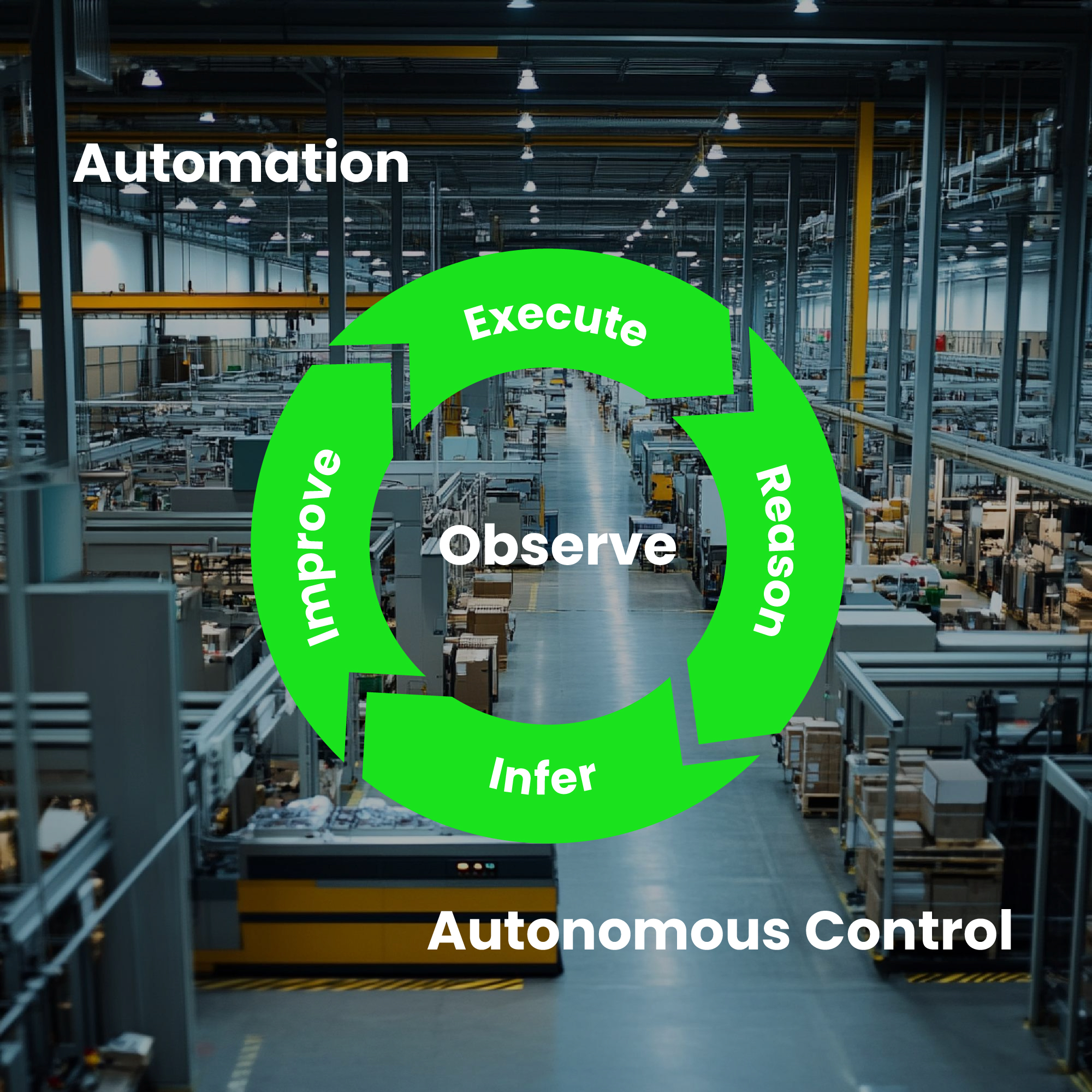
Armed with predictive intelligence, the digital twin begins to participate actively in plant control. Within pre-defined safety envelopes, it communicates with the distributed control system to adjust process setpoints, coordinate subsystems, or initiate preventive interventions. These actions form an autonomous feedback loop: observe → infer → learn → act resulting in an environment that continuously self-optimizes — minimizing waste, stabilizing output quality, and conserving energy — all while maintaining transparency for human operators.